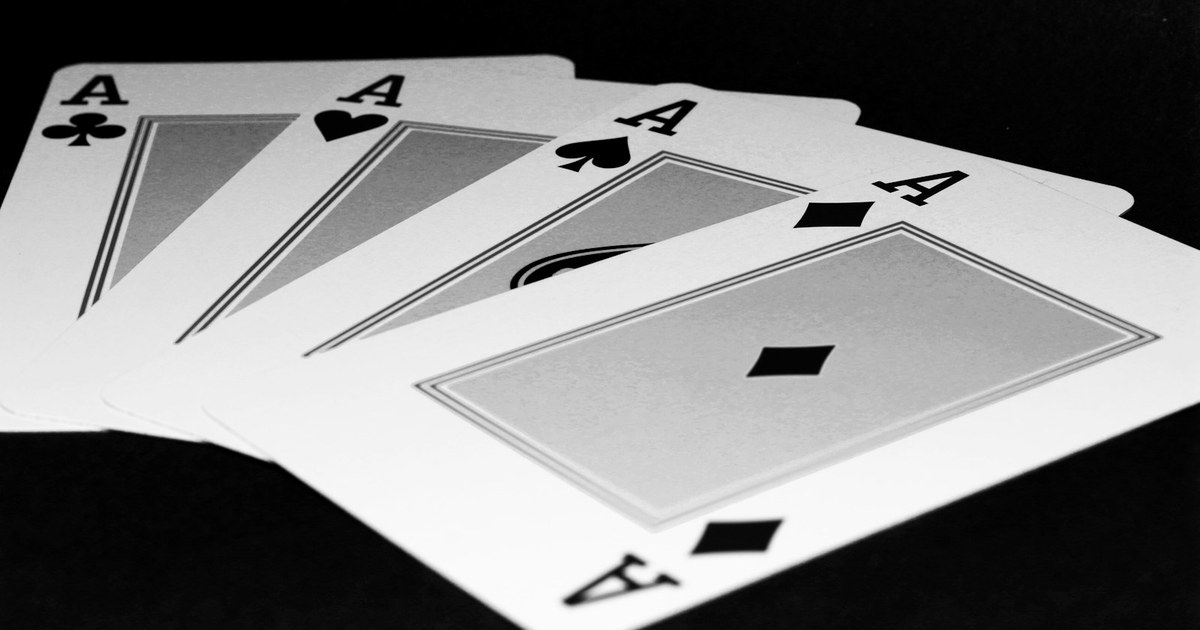
Pusoy Dos ranks cards 2 highest, then A down to 3, with suits ordered diamonds, hearts, spades, clubs. Thus 2♦ is the strongest single and 3♣ the weakest. Five-card plays have their own hierarchy: straight flush, four of a kind plus one card, full house, flush, then straight. This reference uses Pagat’s Philippine suit order with its basic straight and suit-first flush comparisons; alternatives appear at the end.
The complete highest-to-lowest card table
Read down the rows, and left to right within each row. Together they list every card in a standard 52-card deck, without jokers.
| Position range | Rank | All four cards, strongest to weakest |
|---|---|---|
| 1-4 | Two | 2♦ > 2♥ > 2♠ > 2♣ |
| 5-8 | Ace | A♦ > A♥ > A♠ > A♣ |
| 9-12 | King | K♦ > K♥ > K♠ > K♣ |
| 13-16 | Queen | Q♦ > Q♥ > Q♠ > Q♣ |
| 17-20 | Jack | J♦ > J♥ > J♠ > J♣ |
| 21-24 | Ten | 10♦ > 10♥ > 10♠ > 10♣ |
| 25-28 | Nine | 9♦ > 9♥ > 9♠ > 9♣ |
| 29-32 | Eight | 8♦ > 8♥ > 8♠ > 8♣ |
| 33-36 | Seven | 7♦ > 7♥ > 7♠ > 7♣ |
| 37-40 | Six | 6♦ > 6♥ > 6♠ > 6♣ |
| 41-44 | Five | 5♦ > 5♥ > 5♠ > 5♣ |
| 45-48 | Four | 4♦ > 4♥ > 4♠ > 4♣ |
| 49-52 | Three | 3♦ > 3♥ > 3♠ > 3♣ |
Rank is checked before suit. A 4♣ beats 3♦ even though clubs are the lowest suit. Suit becomes decisive when the ranks match: 7♦ beats 7♥, but neither beats 8♣.
The numbers in the first column are reference positions, not point values. Holding the strongest card does not earn 52 points or automatically win a deal. The full how to play Pusoy Dos guide explains dealing and the race to empty your hand; this page concentrates on comparisons.
Suit ranking and equal-rank plays
| Suit position | Suit | Beats |
|---|---|---|
| 1 | Diamonds ♦ | Hearts, spades, clubs |
| 2 | Hearts ♥ | Spades, clubs |
| 3 | Spades ♠ | Clubs |
| 4 | Clubs ♣ | No other suit of the same rank |
This is a suit hierarchy, not a trump suit chosen each deal. All four suits remain available. A diamond does not gain the power to beat every higher-ranked club.
For pairs, compare the shared rank first. Between equal-ranked pairs, compare the strongest suit each contains. 9♦ 9♣ beats 9♥ 9♠ because the first pair contains diamonds. Either pair of nines loses to 10♣ 10♠.
For triples, compare the repeated rank. Three aces beat three kings, and three twos beat three aces. In a single deck, two different players cannot each hold three nines: that would require six nines. Do not manufacture a suit tiebreak for an impossible comparison.
A singles exercise: the suit tiebreak and the pass
The five-card contest at the bottom of this page shows category changes. This exercise uses singles only, and the interesting moment is a rank tie.
Four players, Ana, Ben, Cia and Dee, each hold 13 cards. Ana must open the deal with 3♣, the required first play. Ben answers with 7♥. Cia answers with 7♦. The two sevens tie in rank, so the suit tiebreak decides: diamonds outrank hearts, and 7♦ beats 7♥.
Dee, Ana and Ben then pass in succession. Three opposing passes in a row end the contest, so Cia wins it and leads the next contest. The card count confirms how small this exchange was: Ana, Ben and Cia each have 12 cards left, and Dee still has all 13. Nobody has emptied a hand, so the deal continues.
Two habits come out of this sequence. First, the pass is cheap. Passing skips your current turn; it does not stop you from playing later in the same contest if your turn comes around again. Here, three consecutive passes end the contest, and Cia leads next. Second, when ranks tie, look at suits before looking anywhere else. Ben chooses to pass; the example does not show whether he holds a higher single. Neither 7♠ nor 7♣ would beat 7♦.
Legal play sizes are separate lanes
| Cards played | Legal shape | What can beat it |
|---|---|---|
| 1 | Single | A higher single |
| 2 | Pair of equal ranks | A higher pair |
| 3 | Three of a kind | A higher triple |
| 5 | One of the five types below | A stronger five-card play |
Two pair is not an independent legal play, and a triple plus two unrelated cards is not a full house. Four equal cards need a fifth card to enter the five-card lane. A single 2♦ cannot interrupt a pair or a five-card hand, however strong it is as a single.
That distinction answers many apparent ranking puzzles. First ask whether the reply is the right size. Only then ask which play is stronger.
Five-card combinations, highest to lowest
Each example below is independent; the rows are illustrations, not one shared deal.
| Position | Combination | Example | Comparison within its type |
|---|---|---|---|
| 1 | Straight flush | 9♦ 10♦ J♦ Q♦ K♦ | Sequence height, then suit |
| 2 | Four of a kind plus one card | Q♣ Q♠ Q♥ Q♦ 4♣ | Rank of the four matching cards |
| 3 | Full house | 8♣ 8♠ 8♥ K♣ K♦ | Rank of the triple |
| 4 | Flush | 3♦ 5♦ 7♦ 9♦ J♦ | Suit first, then highest card |
| 5 | Straight | 5♣ 6♦ 7♥ 8♠ 9♣ | Sequence height, then suit of its highest card |
Any flush beats any straight. Any full house beats any flush. The category comparison comes before the cards within it: a low full house still beats a flush containing a two.
For full houses, 8♣ 8♠ 8♥ 3♣ 3♦ beats 7♣ 7♠ 7♥ A♣ A♦. The pair of aces does not rescue the weaker triple. The fifth card accompanying quads similarly does not overturn the rank of the four matching cards.
A royal flush is the ace-high end of the straight-flush category, not a sixth five-card category. Under the chosen suit order, A♦ K♦ Q♦ J♦ 10♦ is the highest five-card play.
Every valid straight sequence in this version
Twos behave differently inside straights: they sit below three. The ace may be high or low, but cannot bridge king and two in the middle of a sequence.
| Strongest to weakest | Rank sequence |
|---|---|
| 1 | 10-J-Q-K-A |
| 2 | 9-10-J-Q-K |
| 3 | 8-9-10-J-Q |
| 4 | 7-8-9-10-J |
| 5 | 6-7-8-9-10 |
| 6 | 5-6-7-8-9 |
| 7 | 4-5-6-7-8 |
| 8 | 3-4-5-6-7 |
| 9 | 2-3-4-5-6 |
| 10 | A-2-3-4-5 |
2-3-4-5-6 is valid here and beats A-2-3-4-5. Q-K-A-2-3 and J-Q-K-A-2 are invalid. Apply the same sequence order to straight flushes.
When equal sequences compete, compare the suit of the highest sequence card. For the wheel A-2-3-4-5, that card is the five, not the ace or two. A wheel ending in 5♥ beats one ending in 5♠.
The flush rule that changes close decisions
In this page’s suit-first version, 3♦ 5♦ 7♦ 9♦ J♦ beats 2♥ 6♥ 8♥ 10♥ K♥. Diamonds outrank hearts, so the heart two does not decide the comparison.
Within one suit, compare the top card using the normal two-high order. Two separate flushes in the same suit cannot share the same physical top card in one deck, so their highest cards settle that legal comparison.
Do not switch between suit-first and rank-first methods halfway through play. Both exist in documented Big Two variants, and they can award the same contest to different players.
A complete five-card contest
Four players are acting anticlockwise. Ana opens the deal with 3♣ 4♦ 5♥ 6♠ 7♣, a straight containing the required 3♣.
Ben answers with 3♦ 5♦ 7♦ 9♦ J♦, a flush. Cal answers with 8♣ 8♦ 8♥ Q♣ Q♦, a full house. Dee answers with 10♣ 10♦ 10♥ 10♠ 2♣, four tens plus a fifth card.
Ana, Ben and Cal then pass in order. Dee wins this contest and gets the next lead. All twenty played cards are distinct. Each player has used five of their original thirteen and has eight left, so winning this contest has not yet won the whole deal.
The decisive steps were category changes: straight to flush to full house to quads. Dee’s 2♣ is the required fifth card, not the reason the quads won.
FAQ
Is the two of diamonds always the strongest play?
It is the strongest single. It cannot beat a pair, triple or five-card hand because replies must stay in the same size lane.
Does a flush beat a full house?
No. Full house is above flush. Check the category table before comparing suits or individual card ranks.
Is A-2-3-4-5 the highest straight?
Not in the selected version. It is lowest; 10-J-Q-K-A is highest. Some tables use different straight orders, as noted below.
Are these also the rankings for ordinary Pusoy?
No. The Pusoy guide covers a 13-card arrangement game, with different use of twos and suits. The Filipino card games directory distinguishes the games.
Differences to confirm at another table
Pagat documents spades-high suit orders, alternative ace/two sequences, rank-first flush comparisons and versions allowing four-card quads. None replaces the main tables above. Confirm those specific choices before using this reference at a table with different rules; this is one explicit rule set, not a claim that every Filipino group agrees.
Sources
- Pagat: Big Two, including Playable Combinations, Philippine Order of Suits and the separately labeled variations.
Educational content. Adults only.