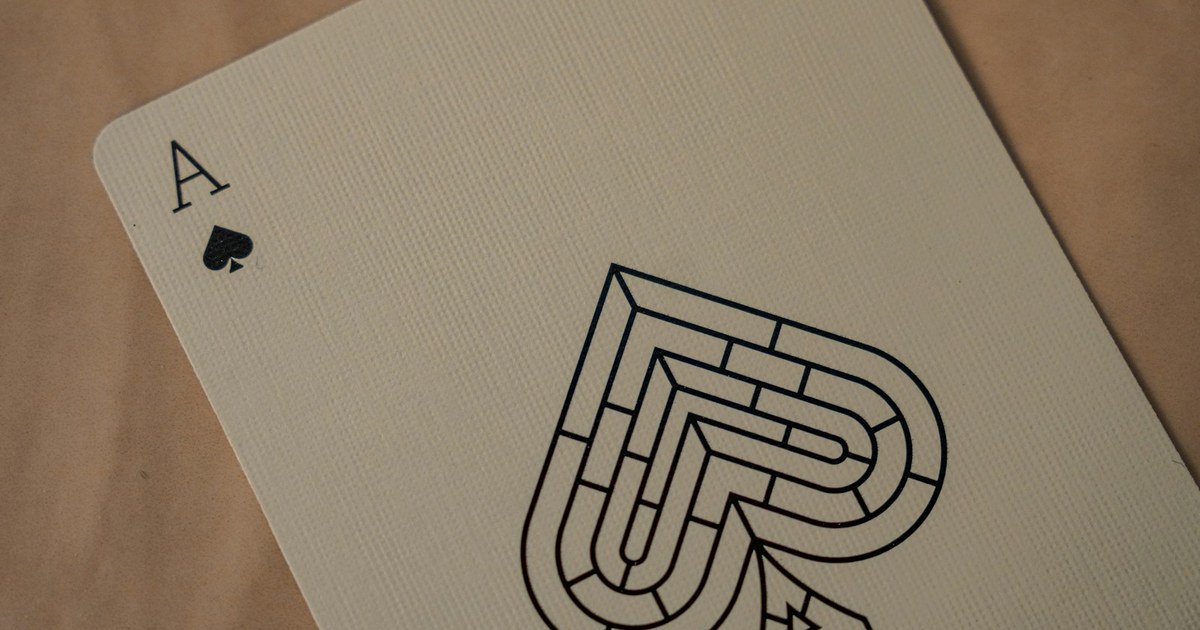
There is no highest suit in poker. Spades, hearts, diamonds and clubs carry identical value in every hand comparison, so a spade flush does not beat a heart flush, and a royal flush counts in any suit. Suit order exists in exactly two places in standard rules, and neither of them has anything to do with hand strength.
Do poker suits have a ranking?
No. Standard poker ranks hands by category first, then by card rank inside that category. Suit never enters the comparison.
A standard deck holds 52 cards split evenly across four suits, 13 cards each:
| Suit | Cards | Value |
|---|---|---|
| Spades | 13 | Equal to the other three |
| Hearts | 13 | Equal to the other three |
| Diamonds | 13 | Equal to the other three |
| Clubs | 13 | Equal to the other three |
| Total | 52 | Standard deck |
The counts are the reason nothing about one suit is structurally luckier. Each suit starts with the same 13 ranks, so each suit produces the same number of five-card flushes: 1,277. The 5,108 flushes in a standard deck divide evenly by four.
How two flushes are compared
When two players both hold a flush, the comparison runs card by card from the highest rank down. The suit decides nothing.
Player A holds A♠ K♠ 9♠ 7♠ 4♠. Player B holds A♥ K♥ 9♥ 7♥ 3♥.
Both are ace-high flushes, so the top four cards match and the comparison reaches the fifth card. Player A’s 4 beats Player B’s 3, so Player A wins. The spades played no part in it.
If all five ranks match, the pot is split. Two flushes with the same ranks in different suits are the same hand.
Where suits do matter
Suit identity has two jobs in standard rules, and neither one ranks hands.
Forming a flush. Five cards of one suit make a flush, and the suit is the matching criterion. Any suit works. Clubs and diamonds produce the same hand category and the same value as spades and hearts.
The stud bring-in. In seven-card stud, the lowest upcard on third street must bring it in. When two players show the same rank, suit decides which one is lower, ranked clubs, diamonds, hearts, spades from lowest to highest. The 2♣ is therefore the worst possible upcard, because it forces a bring-in. This is the clearest case in standard rules where one suit is formally lower than another.
A second case is procedural: many venues use suit to award the odd chip when a split pot cannot divide evenly. The exact order varies by room, so check the house rules. Neither case ranks hands. Both are tie-breakers used to settle a procedure.
Common myths about suit order
The belief that spades outrank hearts survives because some home games invent their own rules. In standard poker, four claims are worth correcting.
“Spades are the highest suit.” No suit outranks another in Hold’em, Omaha, or stud hand comparison.
“A spade flush beats a heart flush.” The ranks decide, never the suit.
“A royal flush has to be spades.” Any suit completes a royal flush: A♠ K♠ Q♠ J♠ 10♠ and A♥ K♥ Q♥ J♥ 10♥ are the same hand value.
“Suits decide who acts first.” In flop games, position decides. In stud, the bring-in is decided by the upcards, which is a separate rule from the normal betting order.
Why the confusion exists
Poker borrows table habits from other card games, and several of them do rank suits. Once a player brings that habit to a poker table, the flushes look different enough to keep the idea alive.
The rule to remember is short: category first, rank second, suit never. If two hands reach identical ranks, they tie.
FAQ
Which poker suit is the highest?
None. All four suits are equal when hands are compared, so no suit is highest.
Does a spade flush beat a heart flush?
No. Two flushes are compared by their card ranks from highest to lowest. The suit does not enter the comparison, and identical ranks split the pot.
Is a royal flush always spades?
No. A royal flush is ace, king, queen, jack and ten of the same suit, in any of the four suits. All four are worth the same.
Are suits ranked in seven-card stud?
Only for the bring-in on third street, where the lowest upcard acts first and ties are broken clubs, diamonds, hearts, spades. Suits still never rank hands.
Data Used
- A standard deck holds 52 cards: four suits of 13 cards each
- 5,108 five-card flushes in total, which is 1,277 per suit
- Flush count from
tools/poker_examples/exhaustive_check.py, evaluator version 1, across all 2,598,960 five-card hands - Stud bring-in suit order cited from OPR-201 seven-card stud rules
Educational content. 18+ only.